
Customer Segmentation for Direct Mail: Who's Worth Mailing
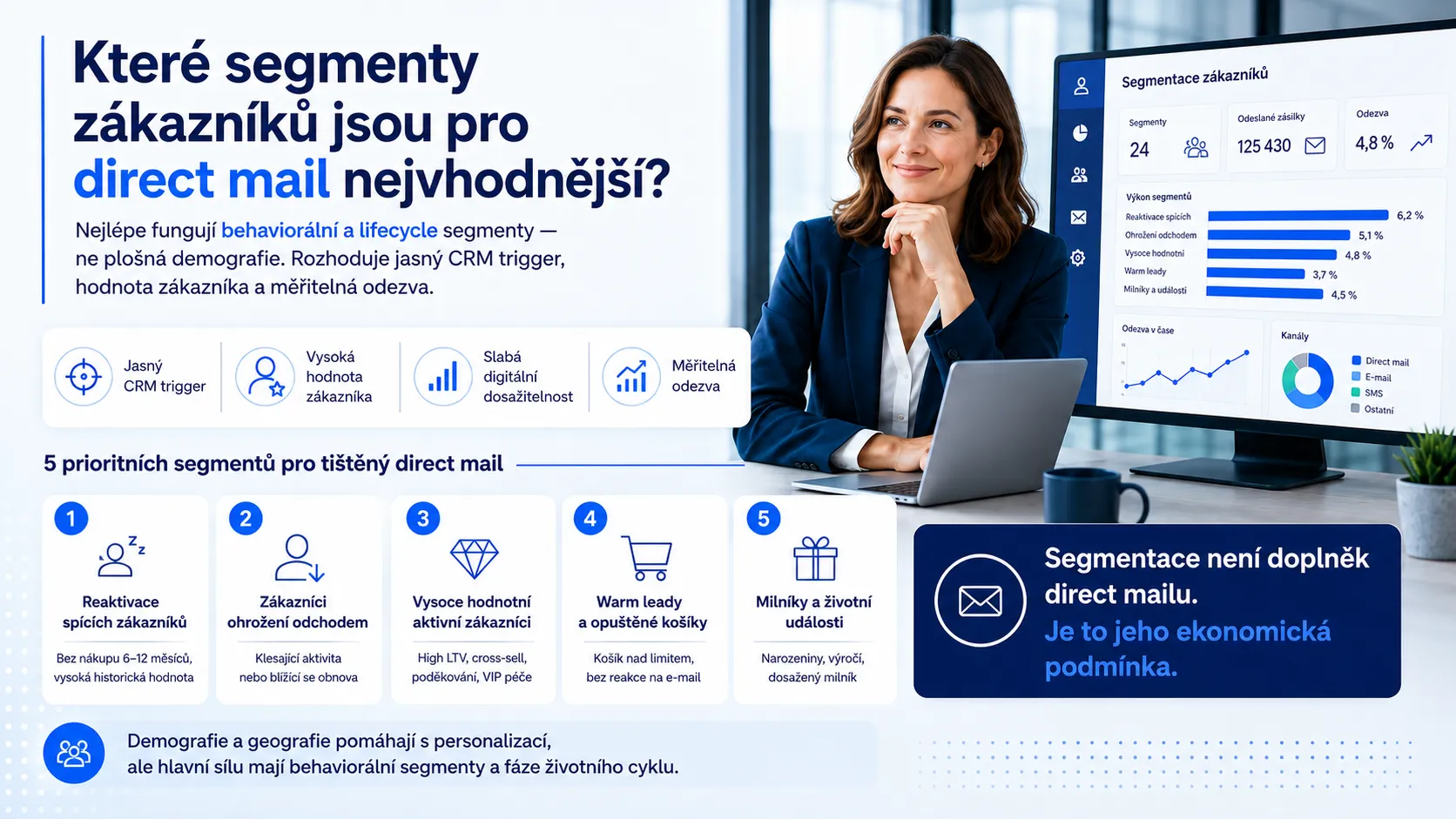
What it covers. The study explains how customer segmentation decides the return on direct mail. It walks through the main segmentation dimensions — lifecycle stage (acquisition, retention, reactivation) and the difference between a "cold" and a "warm" recipient — and shows why what matters is not only how a mailing looks, but who receives it.
Key insights. The segment you choose matters more than the channel or the creative. A warm segment comes from your own CRM: customers whose contract is expiring, who left a full cart, or who haven't bought in 60, 90, or 180 days. According to Lob's research, a reactivation campaign by the brand Marley Spoon reached roughly 20% conversion — one specific campaign aimed at dormant, previously high-value customers, not a market average.
Why it matters. According to Lob (2022 State of Direct Mail Consumer Insights), 52% of consumers then expected communications personalized to them; according to Lob (2023), 58% of marketers were at that time increasing their direct-mail budgets. An unsegmented send dilutes that spend.
Practical relevance. For CRM and retention teams, the takeaway is to work with owned, consent-correct data and reactivate dormant cohorts — not to buy cold address lists.